
History:The Origins and Language of Nohgaku
Nohgaku is one of Japan’s oldest living performing arts, refined over more than six centuries and continuously transmitted to the present day.
Rooted in ritual, poetry, and court culture, it developed not as entertainment alone, but as a form of artistic expression deeply attuned to time, impermanence, and the unseen dimensions of human experience.
Nohgaku consists of two complementary forms: Noh and Kyōgen, traditionally performed together on the same stage.
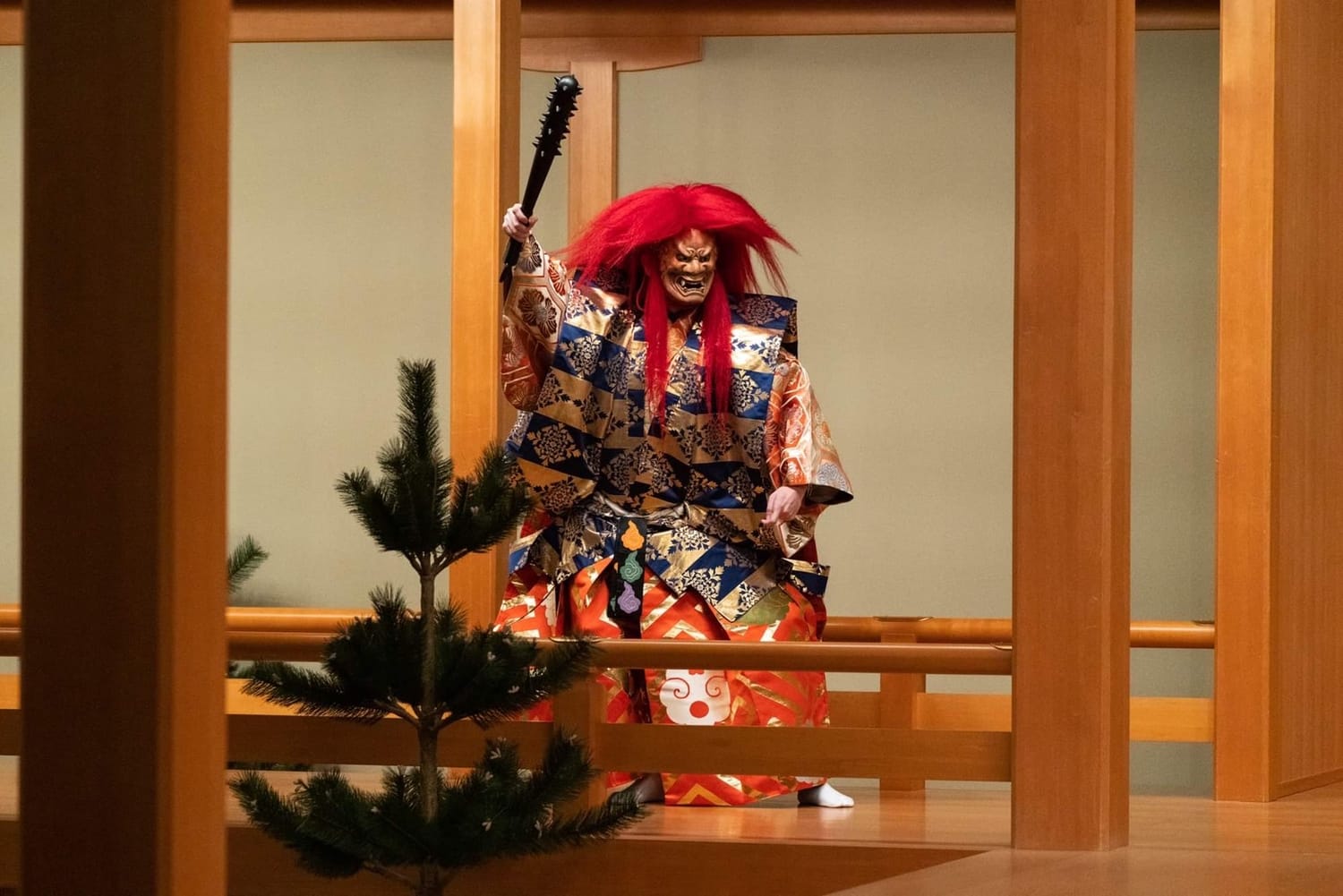
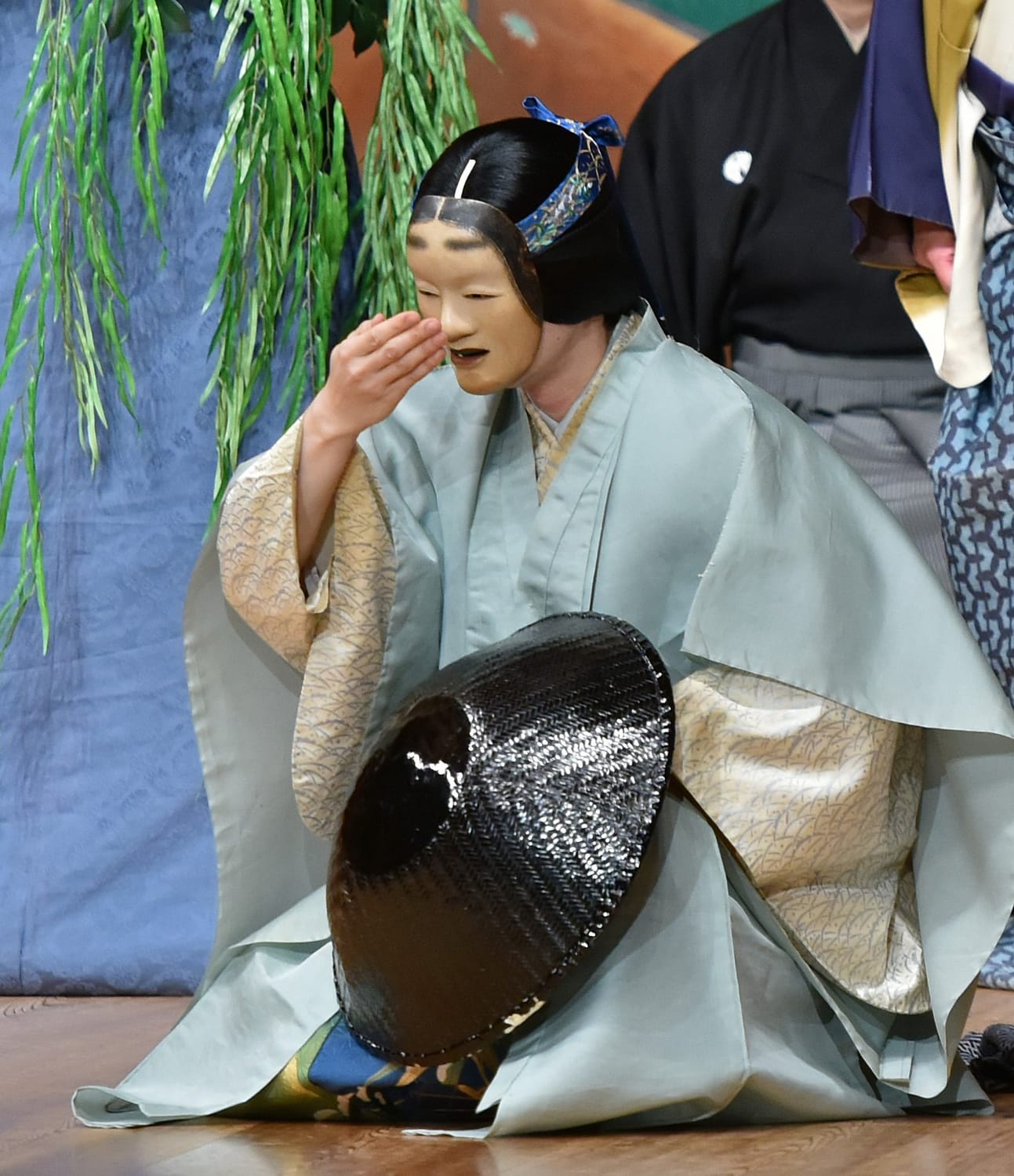
Noh is poetic, introspective, and often spiritual in nature. Its narratives draw from classical literature, history, and myth, and are expressed through highly distilled movement, chant, and music. Masks are not used to conceal emotion, but to transform the performer into an archetypal presence—human, spirit, memory, or longing itself.
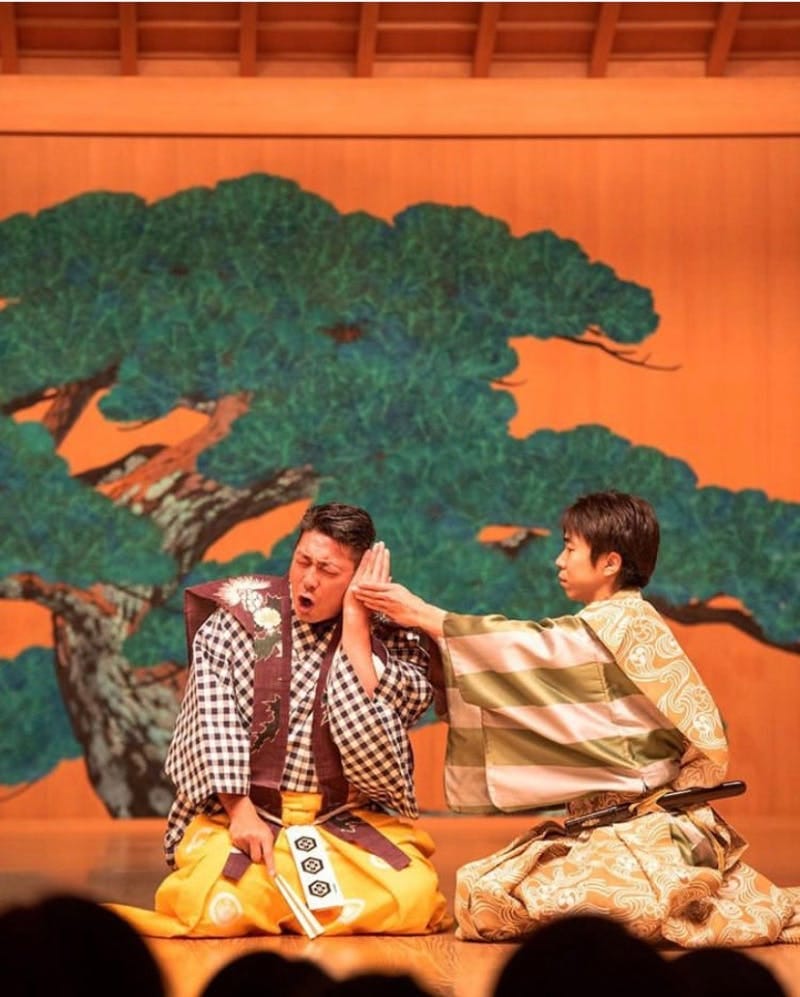
Kyōgen, by contrast, is grounded in everyday life. It is humorous, direct, and vividly human, portraying ordinary people, misunderstandings, and social absurdities with clarity and wit. Where Noh invites contemplation, Kyōgen brings immediacy and laughter. Together, they create balance: the profound and the playful, the eternal and the ordinary.
Understanding the history of Nohgaku means learning how meaning is shaped through restraint—how silence carries weight, how time is formed through slowness, and how suggestion often speaks more powerfully than explanation. It is an art that does not reveal itself all at once, but unfolds gradually through patience, attention, and repeated encounter.
©2025, CSS Holdings Group, LLC